
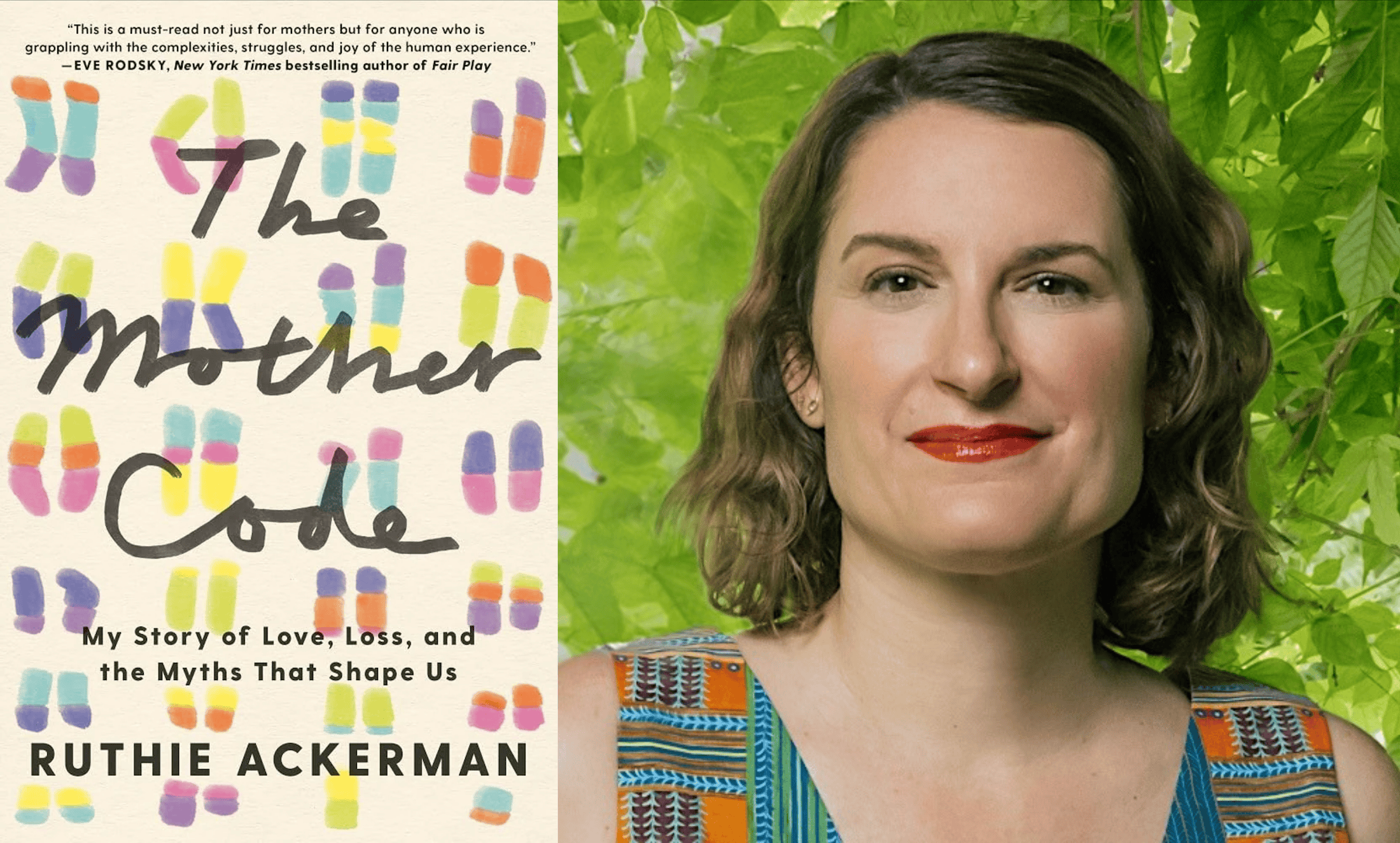
Ruthie Ackerman is an award-winning journalist and author of The Mother Code (Random House), born from her New York Times Modern Love essay. She’s also been published in Vogue, The Atlantic, and The Wall Street Journal.
Ruthie is returning to serve as a mentor for “Memoir Masterclass”—our upcoming KAA Writers Retreat in Tuscany.
To help you get to know her better, we asked a few questions about telling your own story with honesty and excellence.
Here’s what she had to share…
How did you know your story was a book and not just an essay?
Because I wrote the essay, and there were still so many tentacles that I wanted to address. The best books have a question or questions at the center, and I knew an essay couldn’t answer all the questions I had. Only a book could.
You’ve said your personal story drives a larger story about the myths women are handed. How do aspiring memoirists find the universal thread in their own lives?
Through writing about one’s own life, you can start to see the patterns that bubble up over time. Are you always looking for the place you belong? Are you trying to find love in all the wrong people? Do you think you want one thing only to realize you desire something totally different? Once you pinpoint your own motivations, it’s easier to see the universal themes that run through all of our lives.
What’s the difference between a memoir and a collection of things that happened to you?
A memoir has a throughline—a scaffolding that holds the story together. The author is taking the reader on a journey to discover how they were transformed by their life experience. Done well, a memoir shows not just what happened but what you did with what happened to you. The lessons, reflections, and wisdom that helped you come out the other side.
When writing a memoir, how do you decide what to leave out?
Once you have your structure, it acts as a north star. Anything that doesn’t map onto the structure doesn’t belong, no matter how good it is.
The Mother Code mixes your own story with history, science, and cultural criticism. How do you weave research into memoir without losing the personal voice?
Everything on the page needs to be seen through your narrator’s eyes. I was the lens through which the reader could see all the strands—research, interviews, or data—that ended up in my book.
How do you write scenes from your past when your memory is incomplete?
We all have fallible memories. Stop looking for the moments that you remember perfectly and just write down the few memories you do remember. You’ll be surprised how much those specific details matter.
How do you handle writing about events while you’re still living through them, or before you know how they end?
Life keeps going. You have to write about events while they’re still in motion. That’s the craft of memoir. Don’t wait for the end. Don’t wait for closure. Write into the questions.
You’ve served as a past mentor at KAA writing retreats. What impressed you about these retreats that made you want to come back a second time?
How much care everyone has toward making the experience the best it can be. Having an agent, editor, and memoirist’s eyes on your pages is priceless. Not to mention some of the best food, wine, and scenery I have ever experienced.
What are you most looking forward to about working with attendees at the retreat?
1) Seeing the light in their eyes when they make a connection that changes the trajectory of their book. 2) Seeing the bond that develops among the attendees by the end of the week.
What’s your favorite thing about Poggio alle Corti, the Tuscan Villa where we host our retreats?
The view! How could you not write a perfect draft looking out over those olive groves?
What writing goal are you chasing right now?
I’m writing my second memoir right now! Stay tuned 🙂
More about Ruthie
An award-winning journalist, Ruthie Ackerman’s writing has been published in Vogue, Glamour, O Magazine, The New York Times, The Atlantic, The Wall Street Journal, Forbes, Salon, Slate, Newsweek, and more. Her Modern Love essay for The New York Times became the launching point for her memoir, The Mother Code: My Story of Love, Loss, and the Myths That Shape Us, which was published by Random House in May of 2025.
Ruthie launched the Ignite Writers Collective in 2019 and since then has become an in-demand book coach and developmental editor. Her client wins include a USA Today bestseller, book deals with Big 5 publishers, representation by buzzy book agents, and essays in prestigious outlets. She has a Master’s in Journalism from New York University and lives in Brooklyn with her family.
Categories:
Uncategorized