
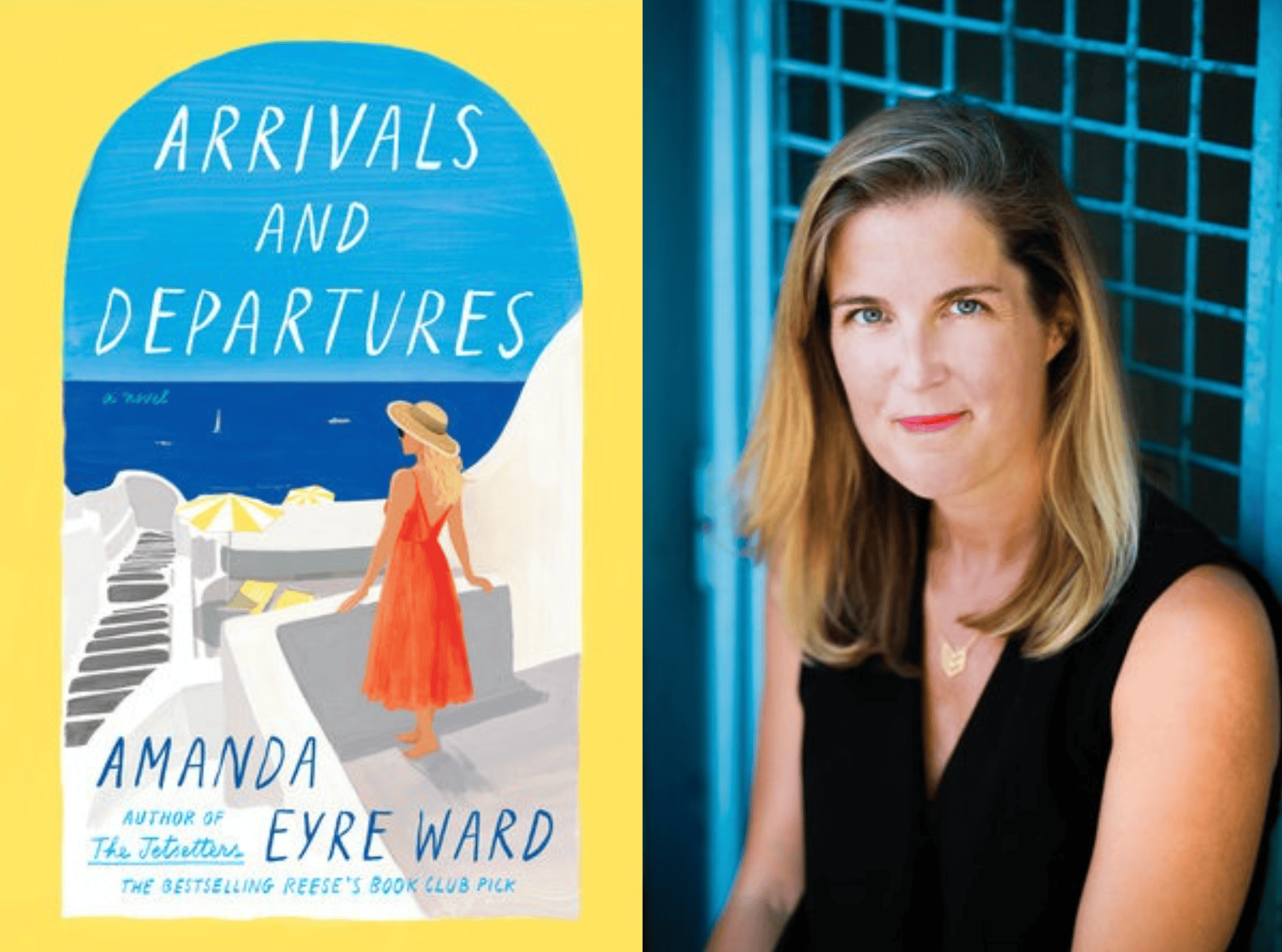
Amanda Eyre Ward is the New York Times bestselling author of twelve novels, which have been translated into sixteen languages. Her work has earned her a reputation as one of the most versatile and compelling voices in contemporary fiction, with honors including the Kirkus Reviews Best Books distinction, Elle Magazine’s Fiction Book of the Year, and the Violet Crown Book Award. Her newest novel, featuring the same characters as her Reese’s Book Club pick, The Jetsetters, is Arrivals and Departures.
Amanda is serving as a mentor for “Powerful Storytelling”—our upcoming KAA Writers Retreat in Tuscany.
To help you get to know her better, we asked a few questions about craft, characters, and building a career as an author.
Here’s what she had to share…
When you begin a novel, what usually comes first for you: a character, a premise, a scene, or a larger question you want to explore?
I become obsessed with a fictional character. Everything begins and ends with character for me. I dream about them and “see” them and use colored index cards to keep track of the scenes I imagine. Eventually, I organize the cards into a 3-act structure and start writing pages.
Your novels often center on emotionally complicated characters facing major life changes. How do you develop characters who feel flawed and authentic rather than simply “likable”?
I don’t really think about whether they’re likeable, and I don’t even choose what they do—it’s more a revelation to me, as if they have always been there and I am just seeing what they’re doing and who (and where) they are.
What do you think aspiring authors most often misunderstand about creating compelling characters?
Michael Cunningham was my teacher at the Napa Valley Writer’s Conference, and he gave us a great and simple exercise to write 15 things about a character in a list before you begin a scene. These “things” may or may not show up in the work, but inform how a character sits, crosses their arms, relates, and speaks.
How much do you know about the ending of a novel when you begin writing it? Has your approach to plotting changed over the course of your career?
I always have my index card plan, and every day I write without a destination and then end up throwing away cards and re-planning the book. I keep hoping I can find an easy way to plot and write books, but now I just accept that this is my twisted way of doing things.
What does your revision process actually look like? What are you looking for when you return to a first draft?
I use highlighters of different colors to go through a printed manuscript, tagging characters, descriptions, problems, and where I need more or less. Then I put my rewrite sessions on a calendar so it seems organized.
Your books have a strong sense of place. How do you use setting to deepen character and story rather than simply providing background?
I was once taught to treat every setting like a tourist, to use every setting as color and its own character. So I try to do that.
How do you balance writing the story you personally want to tell with writing a book that will connect with a commercial audience?
Every time I think about reviews, sales, and things I can’t control, the work (and my life) gets worse. So I try not to!
What have you learned about working with agents and editors that you wish you had understood when you were first trying to get published?
Surround yourself with people who like you and see what you’re trying to do. I’ve had the same agent for 24 years, and the same editor for 15.
If you could sit down with an aspiring novelist who has written their first manuscript and is about to enter the publishing process, what’s the first thing you would tell them to do—and the first thing you would tell them not to do?
Start a new book. Put your energy there, so you can be brave about sending your first book into the world. The joy is in the writing, so stay there as much as you can. Try to meet agents and editors whenever you can…and research who they are and what they love. I don’t think you need to tell them how to sell your book, and you don’t have to do anything you don’t want to your work. The writers who keep writing and get better and love the work and don’t stop are the ones who succeed.
More about Amanda
Amanda’s writing career has been distinguished by both critical acclaim and a deep commitment to nurturing emerging writers. She has been awarded prestigious residencies at the MacDowell Colony and Yaddo. As a Featured Professor at the Kauai Writers Conference since 2020 and former Fiction Faculty at the Squaw Valley Writers’ Conference, she brings decades of experience to her teaching. Amanda has served as a Visiting Assistant Professor at the University of Eastern Kentucky’s MFA program and began her teaching career as a Fellow at Phillips Exeter Academy and Athens College in Greece.
Beyond fiction, Amanda is an accomplished travel and food writer whose work appears in Travel + Leisure, Bon Appétit, Food & Wine, AFAR, and Texas Monthly, where she specializes in luxury hospitality and culinary tourism. She is also a Featured Speaker at Lake Austin Spa and Rancho La Puerta.
Amanda lives with her family in Austin, Texas, and writes best on a long airplane flight while everyone else is asleep.
If you’re interested in learning from her directly at our upcoming writers retreat, click here to learn more.
Categories:
Uncategorized