
The New York Times just ranked the “50 Best Thrillers of the 21st Century.”
We’re proud to say that KAA Executive Editor Kendra Harpster acquired and edited three of the books on this list!
To celebrate, we’ve asked her to share what it takes to release a genre-redefining thriller and how those truths can make all of us better writers.
What makes a thriller a thriller?
One word: suspense. The ratcheting up of uncertainty, tension, and excitement drives everything.
When you read a thriller manuscript, what makes you think, “I have to keep reading”?
Voice and character are what grab me in any fiction, thriller or otherwise!
What was the first book that made you fall in love with the genre?
I might be bending the parameters of the question since he’s equal parts horror and thriller writer, but Stephen King’s collection Night Shift led me to Misery, and I’ve never been the same since.
What’s the #1 red flag for you when reading a new thriller manuscript?
Heavy-handedness and exaggeration. I think the best thriller writers have mastered the art of subtlety. Readers are too smart to tolerate being ham-handedly manipulated.
What does a great developmental edit of a thriller actually look like? What are you changing?
I edit from a place of curiosity and question-asking. I reason that if something makes me pull up short with confusion or curiosity, 100 other readers will notice the same thing. Asking the writer what they’ve intended to elicit from the reader, and sharing my reactions, is how we figure out if we’ve used the right words in the right order. I also spend a lot of time asking the writer about character motivation and story arc. If any of these things haven’t been fully elaborated in the writer’s imagination, there’s work to be done.
How do you write a book that stands on its own, while leaving the door open for a potential series?
Any book can be a lead-in, or companion to, a second or third or fourth book. But while unsolved mysteries and open-ended plots may seem like obvious prerequisites for series potential, I think it’s a mistake to leave questions completely unanswered under the misguided hope that a big cliffhanger will entice readers to wait for another book. The reader still demands satisfactory developments of characters and plot, and leaving things unresolved for the sake of sustained suspense between books may not compel the reader to wait for the next installment. It is something more subtle and refined that sustains a series. Perhaps a peripheral character from the first book becomes the protagonist of the second. Or the protagonist’s own development may remain in flux, even while the mystery at the heart of the story has been resolved. Even the setting can be a binding element.
You’ve edited three of the 50 best thrillers of the century. How does it feel to see something like that in The New York Times?
I’m extraordinarily proud of the writer who managed to get three of their books on this list! When I see the writer’s work and talent acknowledged in such a way, I am awed that I was among the first two or three readers (second to spouse and agent?) to experience the joy of reading these masterpieces.
Did The New York Times get it right? What, in your opinion, is the greatest thriller of the 21st century?
While I remember exactly where I was when I figured out the seismic twist in Gone Girl (poolside in Denver), I think Room is the most extraordinary thriller written in the last 25 years. I still marvel that Donoghue was able to write a plot of such unimaginable horror while also portraying one of the most beautiful examples of motherhood and female fortitude I’ve ever encountered.
What’s your favorite thing about working at KAA?
The people at KAA shine. Everyone comes with a different relationship to writing and publishing books. Most of an editor’s work is done alone, but the times when I collaborate with another KAA editor are among my favorite experiences.
If you could go back and give your younger self advice, when you just started as an editor, what would you say?
The heartbreaks will be many, but the successes will make even the lowest of low days worth it. Stick with it; you’re going to read something life-changing soon.
About Kendra Harpster, Executive Editor at KAA
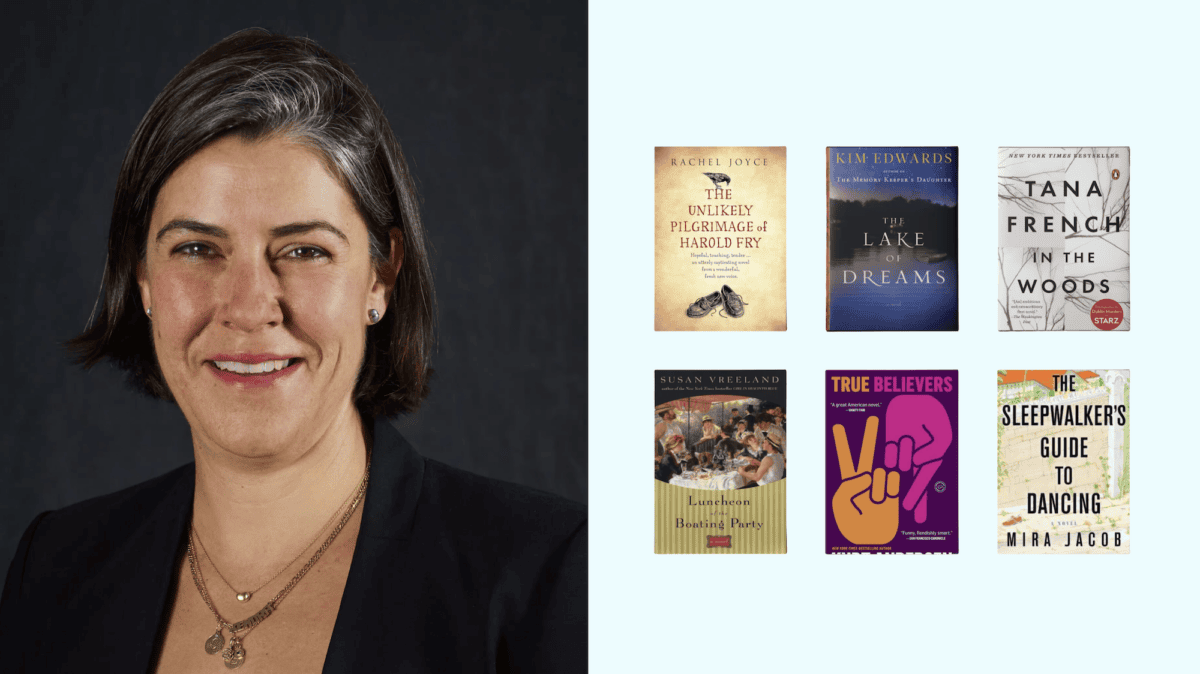
Kendra Harpster is a former Executive Editor at Penguin Random House who has acquired and edited a wide range of fiction and memoir, including numerous award-winning and New York Times-bestselling books.
She began her 20+ year publishing career in 1999 at Doubleday, where she assisted the Editor-in-Chief. In the years following, she rose up the ranks of editorial departments at Doubleday, Random House, Viking Books, and Berkley Books (Penguin Random House). Her list of notable and bestselling authors includes Kim Edwards, Rachel Joyce, Jim Lehrer, Kurt Andersen, Garrison Keillor, Mira Jacob, Susan Vreeland, Liz Moore, Mark Haddon, David Rakoff, and many others.
You can read more about her background here.
If you’d like to work with Kendra, or one of our other in-house editors, visit this page to learn more about our editorial services.
Categories:
Uncategorized