
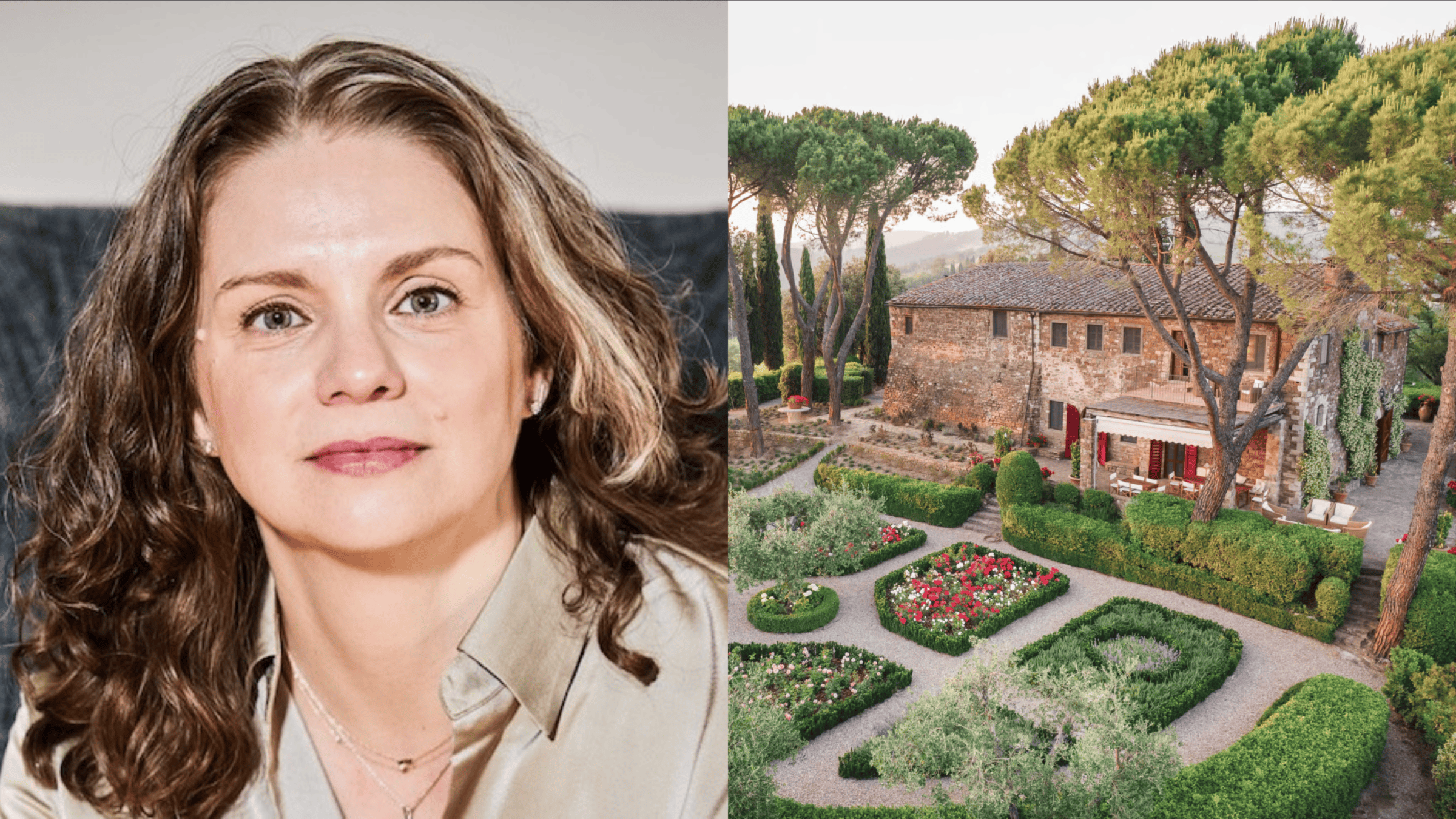
We’re thrilled to announce that Kate McKean has agreed to serve as a writing retreat mentor for our upcoming Nonfiction Masterclass in September of 2026.
Kate is a literary agent at the Howard Morhaim Literary Agency in Brooklyn, New York. She earned her MA in fiction writing at the University of Southern Mississippi. Her work has appeared in Poets & Writers, Electric Literature, Catapult.
Her first book, Write Through It: An Insider’s Guide to Publishing and the Creative Life is available from Simon Element.
We recently asked Kate a few questions about publishing, writing retreats, and more. It’s a chance to get to know her a bit better…
What was the book that made you fall in love with reading, and eventually publishing?
I think the first book I remember rereading as a kid, besides picture books, was Judy Blume’s Just as Long as We’re Together. That book felt like a warm hug and I never wanted it to end. But it was reading Max Perkins: Editor of Genius by A. Scott Berg, a biography of Hemingway, F. Scott Fitzgerald, and Thomas Wolfe’s editor, in college that solidified my desire to go into publishing. I soon after learned about literary agents more and that was that.
Let’s talk craft: What’s one change the majority of authors can make to strengthen their writing?
Learn to recognize your warm-up writing. Most authors can cut the first page (or ever first ten pages) of their work because that’s just your brain warming up, or you clearing your writerly throat. Many even realize their chapter 2 really is chapter 1. Don’t be afraid to cut, cut, cut.
What’s one book every writer should read to improve their own craft (either how-to or something to reverse engineer)?
Everyone should read Bird by Bird by Anne Lamott. That book is your best friend, not only in what it can teach you, but in how it can support you. I also encourage writers to take apart their favorite movie to see how the plot is put together. Do it to a dozen movies. What worked for you as the viewer? What didn’t? You can do this to books, too of course, but the beats are easier to see in movies. Then try to pitch your favorite movie to your best friend, trying to convince them to see it. You can use that as a model to craft the pitch to your book.
As a literary agent, what gets you excited about a proposal or query letter?
I like to be surprised, not by turns of phrase or things for shock-value, but genuinely surprised by what an author comes up with. And when I’m reading a proposal and right away I think this is perfect for [editor name], I know I’ve got something good. When I can see the reader on the other end, whether that’s an editor or someone in a bookstore, I know something’s working.
No matter how many times the question gets asked and answered, we’re always looking for one more tip: How do you overcome writer’s block?
You have to sit with the discomfort of whatever you’re feeling. Sometimes writing sucks. That’s normal. You’ve just got to write through the parts that suck. You can go back and edit it later.
What’s your opinion of ghostwriting? How do you feel about ghostwritten books as an agent?
Ghostwriting is great! I think the right ghostwriter and author team can be magic. We’d miss out on so many great stories without ghostwriters.
Why do you enjoy mentoring writers in small-group settings like this retreat?
There are a lot of supposed “rules” in writing and publishing, but when it comes down to it, every book and every author is different. In a small-group setting, we can get to exactly what this author and this book need, and that’s really gratifying.
What kinds of breakthroughs do you see happen during writing retreats?
Authors have a lot of blind spots. We become so close to our work that we can’t see when something is confusing, boring, or otherwise missing the mark. When you work closely with someone on their writing, you get to see their reaction in real time, and all of a sudden, things become clearer. You don’t know what you don’t know.
If someone is nervous about sharing their work, what would you tell them?
Congratulations! You’re a real writer! Everyone is nervous to share their work because it’s a vulnerable thing to do. You work so hard on it, and you want someone to pat you on the back and say good job. And that can happen! But all writers are nervous to share, and all writers get editorial feedback. That just makes you part of the big family of those who love to write.
What’s one thing attendees can do before arriving to get the most from your mentorship?
Come with questions. Think as objectively as you can about your own work, and make a list of things you want feedback on. Is the beginning too slow? Does my chapter outline make sense? That sort of thing. Not only will you get answers to these questions, you’ll learn if your intuition is right or wrong. That will serve you on all your future projects.
What conversations are you most looking forward to having with writers in Tuscany?
I love to hear what other authors are reading! I know a lot about the current market, but someone always knows some out-of-the-way book I haven’t heard of yet or a classic I missed, and I love to discover books this way. I also like to learn what parts of the publishing and writing worlds authors do and don’t know about, not only because I can help fill in the gaps, but also because it guides me in how I can educate other writers.
What type of writer do you think benefits most from attending a retreat like this?
The author who’s ready to work, not one who’s looking to walk out of the retreat with a signed book deal. Agents and authors are not publishing fairy godmothers who can tap you with their wand and say “Poof! You’re going to be published!” Believe me, we all wish we could do this. But this retreat is best for those who want professional advice on what will make their project stronger, not for those who want a shortcut to the finish line.
We’re excited to have Kate joining fellow retreat mentors James Stephens and Holly Crawshaw for what promises to be a transformational week.
Categories:
Uncategorized